Free delivery on orders over €60 in France and Belgium or €99 or more elsewhere in Europe



Matcha
Matcha tea is a Japanese green tea powder made from finely ground leaves. Rich in antioxidants and caffeine, it has an invigorating effect. Its unique flavour, which is both grassy and slightly bitter, appeals to tea lovers. It can be enjoyed on its own or as a latte, and is also used in many sweet recipes.
🌿 Matcha tea: benefits, uses and preparation
Originating in China but deeply rooted in Japanese tradition, matcha is a ground green tea first mentioned in Japan in 1211 in the Treatise on Nourishing the Vital Principle through Tea Consumption (*Kissa yôjôki* 喫茶養生記). Consumed for centuries by Buddhist monks for its relaxing and stimulating effects, it is distinguished by its powdered form, which is not steeped but whisked into hot water.
Rich in antioxidants (particularly EGCG), vitamins and L-theanine, matcha is known for:
boosting energy without causing jitters;
being rich in essential nutrients;
promoting concentration, relaxation and memory;
A great deal has been written about matcha and green tea in general, so we urge you to treat all health claims with caution. Research into the effects of tea still has a long way to go, and above all, tea will never replace a healthy diet and lifestyle.
In terms of how it’s used, matcha can be enjoyed on its own with water (the traditional way) or with milk (as a latte). It’s also perfect for use in cooking, in both sweet and savoury recipes.
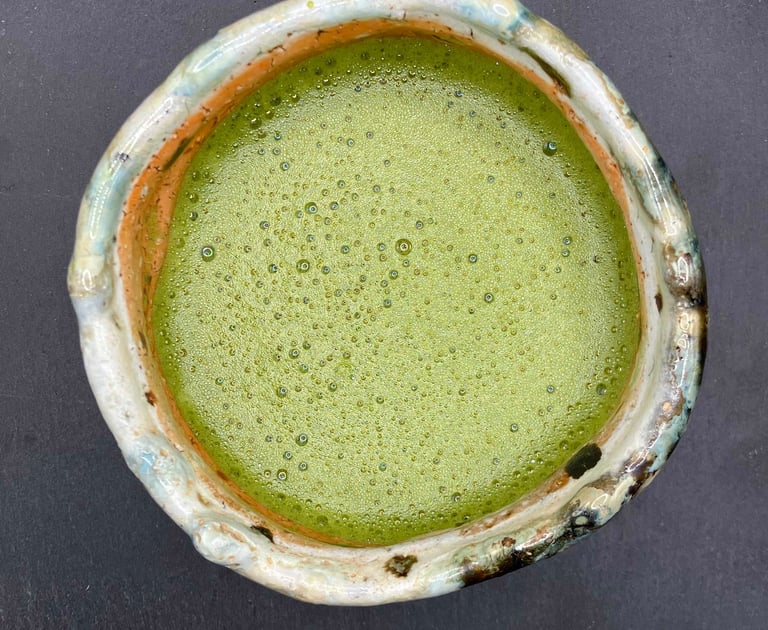
👉 For the best flavour, use 1 g of sifted matcha with 60–70 ml of water at 70–80°C, then whisk in an ‘M’ shape until a nice froth forms.
© 2024. Chanoki
Abonnez-vous à notre newsletter
Maison de thé
Liens utiles
Chanoki
123 rue du château
75014 Paris