Free delivery on orders over €60 in France and Belgium or €99 or more elsewhere in Europe



Sencha
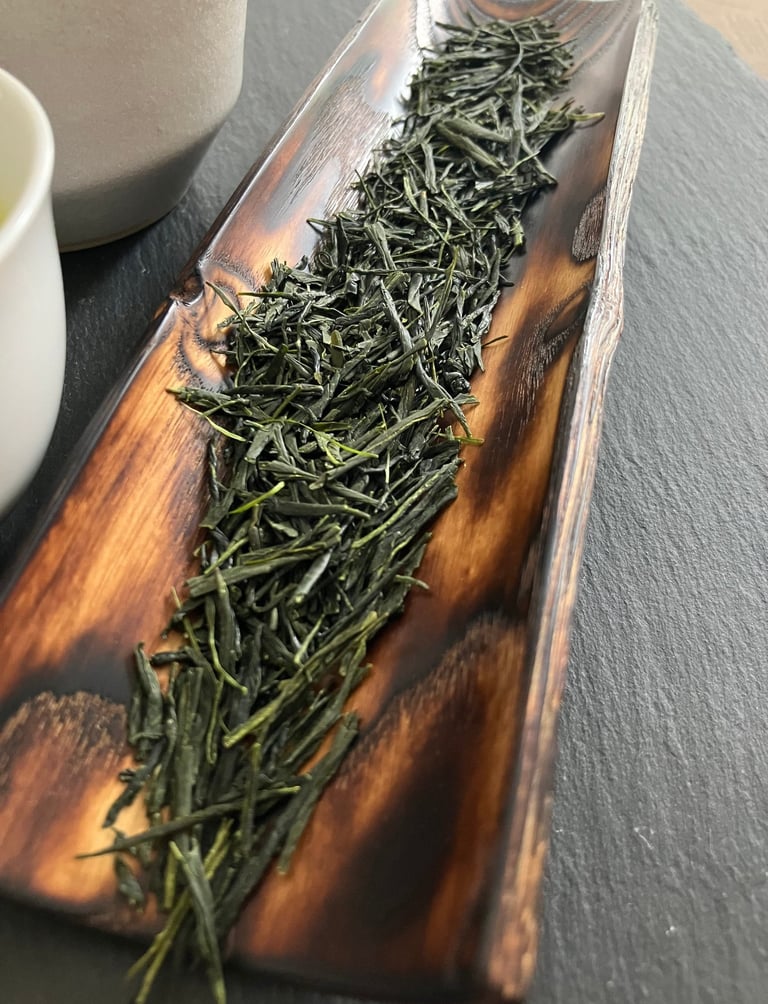
Sencha is the most popular green tea in Japan, accounting for over 50% of the country’s production. Harvested and then quickly steamed, sencha leaves retain their intense green colour, their vegetal aromas and their natural health benefits. Rolled into fine needles, they produce an infusion that is fresh, balanced and invigorating.
Sourced from a variety of regions and cultivars, Sencha offers a wide range of flavours, in which sweetness and astringency blend perfectly. A must-try for lovers of Japanese green tea.
🍃 Sencha green tea: uses, benefits, preparation
A brief historical overview
Sencha is a relatively recent development compared to matcha. In fact, it was perfected (though not invented) in 1738 in the village of Ujitawara, not far from Kyoto, by Nagatani Sôen. The first description of the production of Sencha green tea appears in 1827 in Takano Chôei’s book The Cultivation and Production of Tea in Japan; however, this new tea is already mentioned in other works as ‘green-processed tea’ or ‘tea in the Uji style’, and was quickly regarded as a high-quality tea.
The benefits of Sencha green tea
Sencha green tea is rich in polyphenols (catechins), tannins, L-theanine, as well as vitamins (particularly C and E) and amino acids.
Antioxidant activity: Sencha contains a high concentration of catechins, including EGCG. These properties help to prevent cardiovascular disease.
Antioxidant activity: Sencha contains a high concentration of catechins, including EGCG. These properties help to prevent cardiovascular disease.
Oral health: Thanks to its antibacterial properties, Sencha green tea reduces the growth of oral bacteria responsible for tooth decay, whilst limiting saliva acidity and plaque formation.
Oral health: Thanks to its antibacterial properties, Sencha green tea reduces the growth of oral bacteria responsible for tooth decay, whilst limiting saliva acidity and plaque formation.
Much has been written about sencha and tea in general; we urge you to treat all health claims with caution. Research into the effects of tea still has a long way to go, and above all, tea will never replace a healthy diet and lifestyle.
Preparing Sencha
As for preparation, Sencha is traditionally brewed with water at 70°C. It is worth noting, however, that every Sencha is different depending on its terroir or cultivar, and that the recommendations below, whilst standard, may not be the most suitable for your particular Sencha.
👉 For the best flavour, use 4 g of sencha with 100 ml of water at 70°C, wait one minute, then serve. For the next two infusions, you can use the following settings.
100 ml at 80°C for 30 seconds
100 ml at 90°C for 1 minute
© 2024. Chanoki
Abonnez-vous à notre newsletter
Maison de thé
Liens utiles
Chanoki
123 rue du château
75014 Paris