Free delivery on orders over €60 in France and Belgium or €99 or more elsewhere in Europe



Kamairicha
🍃 Kamairicha green tea: Japan’s other green tea
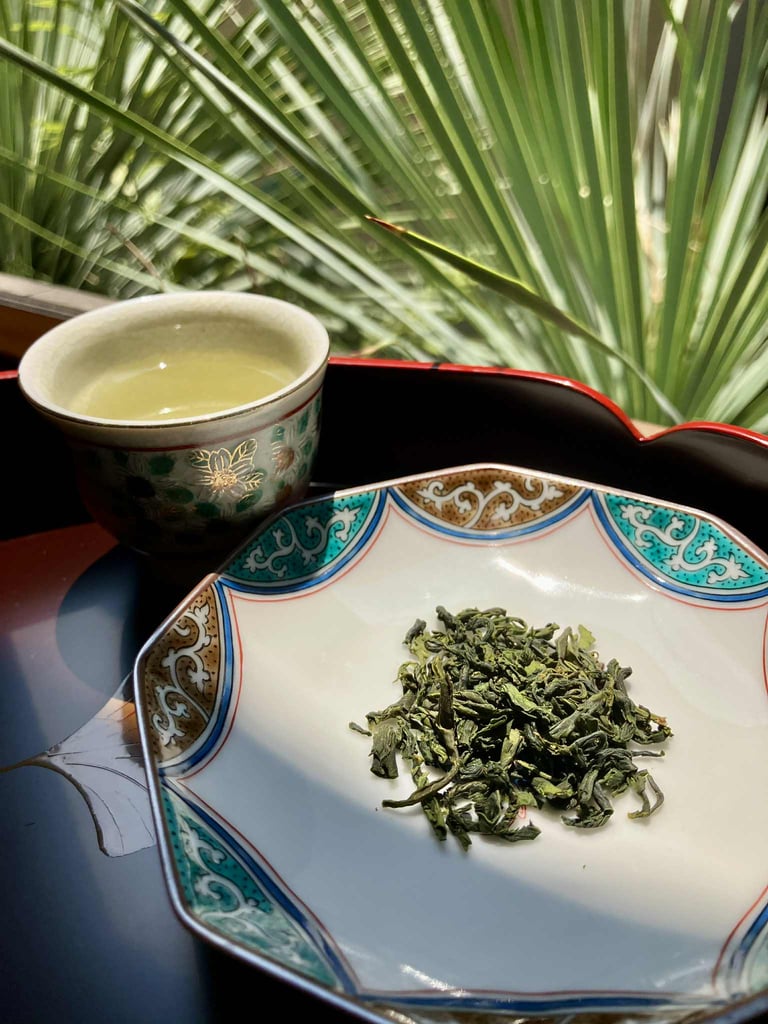
Kamairicha is a rare Japanese green tea, accounting for less than 0.3% of national production – just over 200 tonnes a year – mainly in Kyushu. It is distinguished by its unique production method: the leaves are dry-heated in an iron container at high temperatures (300–450 °C), using a technique of Chinese origin. Unlike steamed green teas, this method preserves a mild, slightly roasted flavour, free from astringency, and a delicate aroma. The result is a refreshing, smooth yellow-green infusion.
Brief historical review
Kamairicha was introduced to Japan in the 15th century by Chinese merchants, with the first recorded mention dating from 1440 in the Saga region on the island of Kyushu. Known throughout the Edo period as the Chinese-style tea ‘tōcha’, kamairicha was gradually supplanted by steamed green teas of the sencha type from the late 18th century onwards.
How to prepare kamairicha
As for preparation, kamairicha is traditionally brewed with water at 80°C. As with all Japanese green teas, the parameters may vary depending on the region, the cultivar and even your personal preference, and whilst the recommendations below are standard, they may not be the most suitable for your particular kamairicha. It is not uncommon in Kyushu for the tea to be brewed at 90°C.
👉 For the best flavour, use 3 g of kamairicha with 100 ml of water at 80°C, wait one minute, then serve. For the next two infusions, you can use the following instructions:
100 ml at 90°C for 30 seconds
100 ml at 90°C for 1 minute
© 2024. Chanoki
Abonnez-vous à notre newsletter
Maison de thé
Liens utiles
Chanoki
123 rue du château
75014 Paris